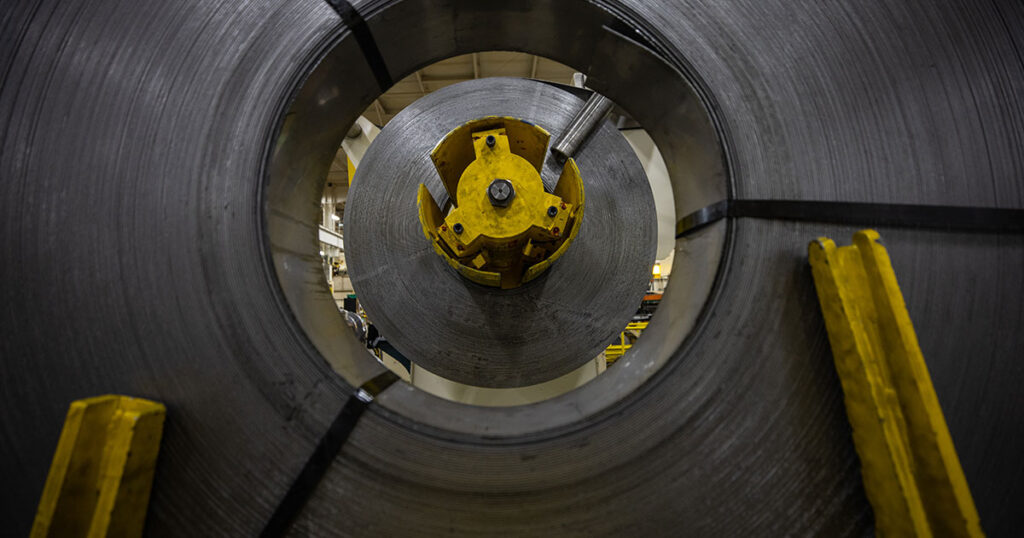
Coiled steel is everywhere, from appliance panels to automotive parts. The hard part is moving a coil safely, staging it near the line, and lining it up so loading is smooth. That’s where a coil car earns its keep.
Quick Answer
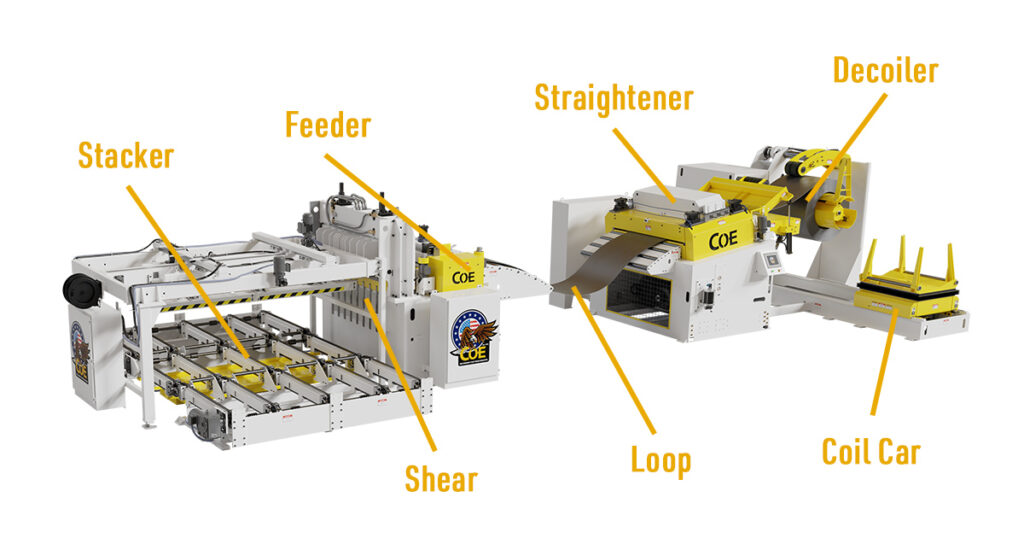
What is a coil car? A coil car is a powered coil-handling device used in steel processing and manufacturing to transport, stage, lift, and align metal coils for loading into a decoiler or other processing equipment. It improves safety and uptime by reducing manual handling and keeping the coil stable and centered during changeovers.
Key Takeaways
- Coil cars cut down on “crane-only” coil changes by handling routine moves and staging at the line.
- The core job is repeatable positioning: right place, right height, right centerline for loading.
- Most designs use travel (X-axis) plus lift (Y-axis) to match the mandrel centerline.
- A V-nest supports the coil OD and helps prevent rolling during travel and setup.
- Anti-tip arms add stability when coils are narrow, short, or more likely to shift.
- A coil riser helps with partial coils and situations where you need extra lift above the nest.
- Better coil alignment usually means fewer retries during mandrel insertion and smoother changeovers.
Choose Your Focus
What a “Coil Car” Means
- A powered platform that moves coils between staging and the processing line
- A positioning tool that brings the coil to the correct loading point
- A lift system that raises the coil to the mandrel or reel centerline
- A cradle (often a V-nest) that keeps the coil stable and controlled
- A way to reduce manual handling and improve changeover consistency
- A method for staging the next coil so downtime is lower
What is a coil car used for on a coil line?
Think of a coil car as the “handoff” tool between coil staging and coil feeding.
In a typical shop flow, it’s used to:
- Transport: Move a coil from storage or staging to the line area.
- Stage: Hold the next coil ready near the decoiler while the current coil is still running.
- Position: Put the coil at the correct height and location so loading is straightforward.
- Support: Keep the coil stable so it does not roll or shift during movement.
If you see operators fighting alignment with pry bars, “walking” a coil into position, or spending too much time waiting on a crane, that’s usually a sign the staging and positioning step needs help.
How coil cars work in plain language
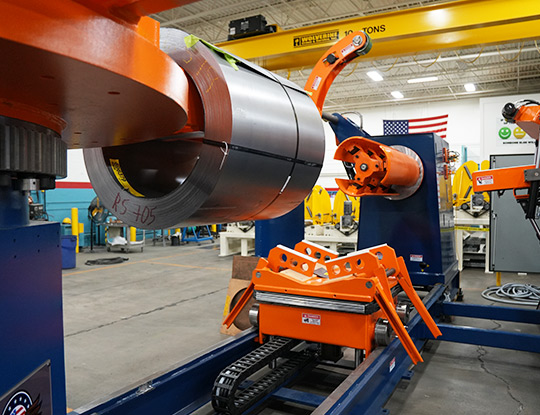
Most coil cars do two main motions:
- Y-axis lift (vertical): The cradle lifts and lowers the coil to match the decoiler mandrel centerline.
- X-axis travel (horizontal): The car moves along the floor, usually on rails or a guided path.
A simple way to picture it:
- The coil car picks up a coil in its cradle.
- It travels to the loading position in front of the decoiler or reel.
- It raises the coil to match the centerline.
- The coil is aligned so the mandrel can enter the coil ID cleanly.
- The coil is transferred onto the decoiler/reel.
What “good alignment” looks like on the floor
- The coil ID is centered to the mandrel without repeated bumping.
- The mandrel inserts smoothly without forcing.
- The coil sits square in the cradle (not cocked or twisted).
- Changeovers feel routine, not “different every time.”
Key features and options
Not every coil car needs every option. These are the ones that show up most often, and why they matter.
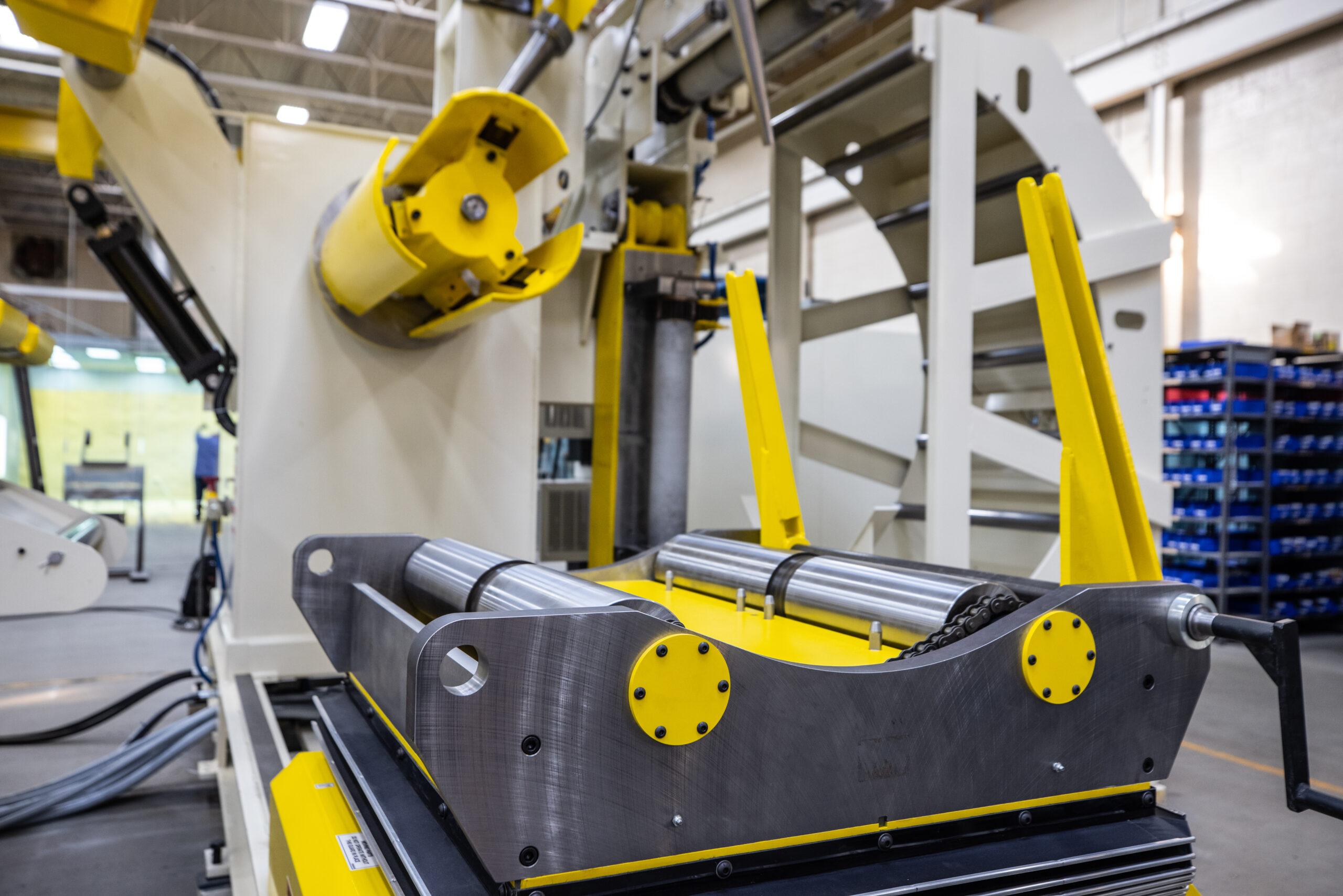
Rotating V-nest
A V-nest supports the coil OD and helps prevent rolling. A rotating version can make loading easier in tight spaces and can help with presentation and control of the coil during setup.
Anti-tip arms
Anti-tip arms (or restraints) reduce the chance of a coil tipping or shifting during movement. They’re especially useful when coils are narrow or when the coil’s stability is a known pain point.
Coil riser
A riser adds extra lift above the V-nest. This can be helpful for:
- Partial coils
- Short coils
- Situations where the line centerline height requires more lift than the nest provides
Mandrel spearing support (alignment aids)
Anything that helps the car present the coil ID at the correct height and centerline reduces “mandrel fighting.” In real use, that usually means:
- Fewer retries
- Less risk of damaging coil edges, ID, or mandrel
- Faster, more consistent changeovers
Where coil cars fit on a coil line
Coil cars are most common in coil-fed operations like:
- Stamping lines (press feed systems)
- Roll forming
- Cut-to-length and blanking lines
- Other coil processing where a decoiler/reel is used upstream
The coil car typically sits between:
- Coil storage/staging area, and
- Decoiler/reel loading position
If your layout allows staging the next coil close to the line, a coil car can help you treat coil changes like a repeatable procedure instead of a custom event every time.
Alternatives to a coil car
A coil car is not the only way to handle coils. The “best” choice depends on coil weights, change frequency, plant layout, and safety practices.
Coil transfer carts
These can move coils across the facility (rail-guided or trackless). They’re strong on transport. Some setups still need a separate method to lift and align the coil at the decoiler. (coiltransfercar.com)
Overhead crane with coil grabs (C-hooks, tongs, etc.)
Common in many plants. The tradeoff is that cranes can become a bottleneck, and spotting the coil into alignment can turn into a slow, manual step. (bradleylifting.com)
AGVs (automated guided vehicles)
AGVs can be a good fit where routes are repeatable and automation is a priority. Coil handling typically requires specialized attachments and good process discipline around staging. (daifuku.com)
Forklifts with coil attachments (ram/boom)
Often used for lower volumes or smaller coils. This can work well when travel paths are clean and operators are trained, but it can be less consistent for precision alignment at the line. (cbimfg.com)
Common mistakes to avoid
These are the problems that cause most “why is this so hard” coil changes:
- Treating the coil car like a transport-only device. If you still need to muscle alignment at the decoiler, you’re missing half the value.
- Not matching lift height to the line centerline. If the car cannot reach centerline smoothly, you’ll fight the mandrel every time.
- Ignoring coil stability. Narrow coils, partial coils, and “odd” coils need better restraint and support.
- No staging plan. A coil car helps most when the next coil is ready and reachable before the line stops.
- Inconsistent setup method. Make loading repeatable: same approach, same stop point, same checks.
Quick coil car checklist for changeovers
Use this as a simple process check during coil change:
- Confirm coil OD/ID and weight match the handling plan
- Verify nest condition and coil is seated correctly
- Use restraint (anti-tip arms) when coil stability is questionable
- Raise to mandrel centerline before attempting insertion
- Align coil ID to mandrel and avoid forcing
- Confirm clear travel path and communication around the line
FAQ
What is a coil car?
A coil car is a powered coil-handling device used in steel processing and manufacturing to transport, stage, lift, and align metal coils for loading into a decoiler or other processing equipment.
What is a coil car used for?
A coil car is used to transport, stage, lift, and align coils so they can be loaded into a decoiler or reel safely and consistently.
Is a coil car the same as a coil transfer cart?
Not always. Transfer carts focus on moving coils from point A to point B. Coil cars typically add lift and alignment functions for loading at the processing equipment.
Why not just use an overhead crane?
A crane can work, but it can become a bottleneck. A coil car can make staging and alignment more repeatable and can reduce the amount of manual “spotting” during loading.
What does a V-nest do?
A V-nest supports the coil’s outside diameter and helps prevent rolling. It keeps the coil controlled during movement and positioning.
When do anti-tip arms matter most?
When coils are narrow, short, partially used, or more likely to shift during travel. They add stability during handling.
What is a coil car riser for?
A riser provides additional lift above the V-nest. It’s often used for partial coils or situations where extra height helps meet the line centerline.