
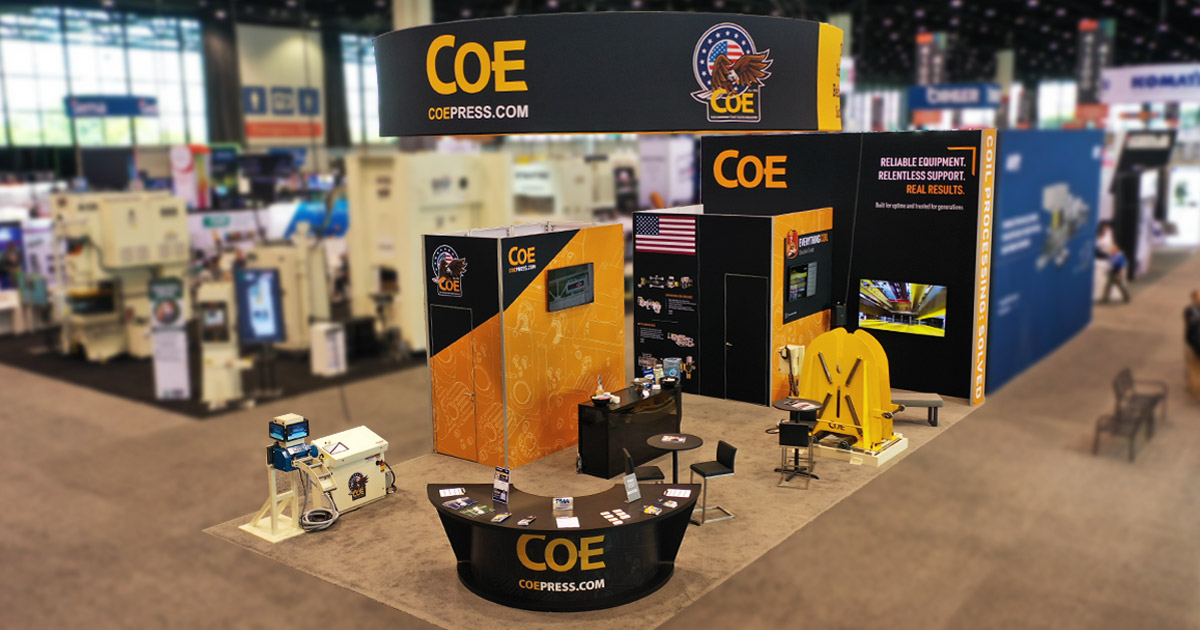
COE at FABTECH 2025 centered on one practical theme: keep material moving without turning coil handling into a science project. Across the show floor, the conversations came back to shop-floor priorities like faster changeovers, steadier feed and alignment, less scrap tied to setup drift, and automation that helps operators without adding steps.
Quick Answer
COE at FABTECH 2025 showed practical ways to reduce coil-handling bottlenecks and keep pressroom and fabrication lines fed consistently. The biggest theme was making changeovers and material flow more predictable without adding complexity for operators.
Key Takeaways
- FABTECH 2025 conversations focused on uptime, faster changeovers, and repeatable coil setup.
- Attendees wanted coil handling that is simpler for operators, but still precise for tighter tolerances.
- Automation interest leaned toward “right-sized” solutions, not full lights-out cells.
- Consistent feed and alignment were tied directly to scrap reduction and downstream rework.
- Flexibility mattered: mixed jobs, short runs, and frequent material changes are the norm.
- Space constraints came up often, especially in retrofit pressrooms and crowded fab areas.
Dual Presence Across the Show Floor: Stamping + Fabrication
FABTECH 2025 in Chicago packed McCormick Place with equipment, demos, and production problem-solving conversations.
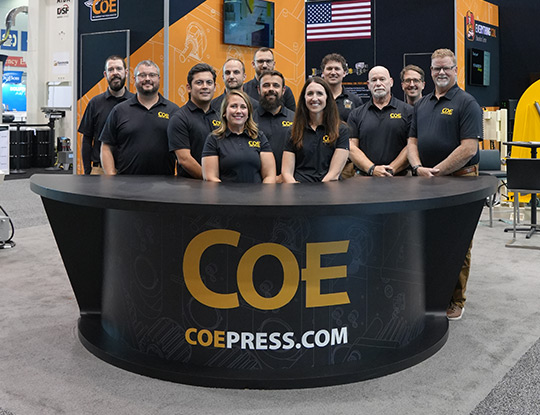
COE’s setup split across two areas:
- A larger stamping-side booth in the metal forming hall, where visitors could focus on coil feeding and handling performance.
- A fabrication-side space dedicated to discussion around cut-to-length applications and where coil processing fits in mixed workflows.
That split mattered because many plants run both mindsets in the same building. One day it’s pressroom throughput. The next day it’s blanks, kits, or staged material for downstream operations.
What We Showed: ServoMaster Sonic Series + EcoCradle
Two pieces of equipment did most of the talking on the stamping side:
ServoMaster Sonic Series (high-speed servo feed)
- Built for high-speed feeding, with capability at over 800 strokes per minute.
- The shop-floor takeaway: speed is only valuable when the feed stays repeatable, especially when you’re fighting cam timing windows, progressive die stability, and strip control.
Read more about COE’s Servo Feeds
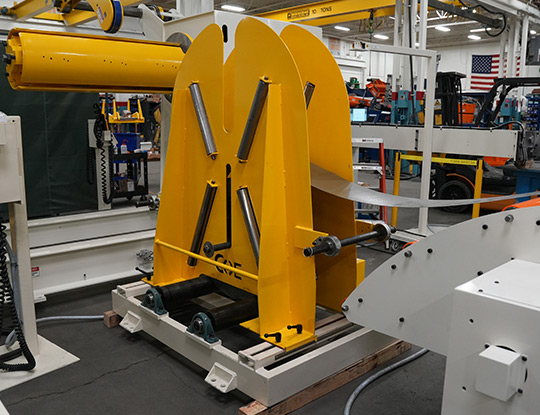
COE EcoCradle
- Positioned as a more economical alternative to traditional coil handling approaches.
- The shop-floor takeaway: less time fighting coil staging and positioning means less time standing still at the press.
In a lot of plants, “uptime” is lost in small chunks: waiting on material, waiting on a coil move, rethreading, or chasing alignment after a changeover. The equipment conversations kept coming back to those real-world minutes.
Read more about COE’s EcoCradle
The Questions We Heard Most: Speed, Scrap, Consistency
The best trade show conversations usually sound like a Monday morning production meeting. The recurring questions were practical:
“Can we run faster without paying for it in scrap?”
Speed pushes every weak link to the surface: guiding, entry conditions, feed repeatability, and how stable the strip stays when conditions change.
“How do we keep setup consistent across shifts?”
Shops want processes that are easier to repeat, especially with less-experienced operators. Consistency is not just quality. It also means faster startup and fewer resets after lunch, after coil change, or after a tool adjustment.
“What can we simplify without losing control?”
Many teams are trying to reduce the number of steps in a changeover. Not by removing safeguards, but by removing the fiddly adjustments that depend on tribal knowledge.
Trends at FABTECH 2025: Automation, Flexibility, Cost Efficiency
FABTECH 2025 made one thing clear: automation is still a priority, but it’s getting more grounded.
Instead of “fully automated everything,” the interest leaned toward:
- Automation that shortens setup time
- Modular upgrades that can be phased in
- Controls that support repeatability and training
- Equipment choices that fit real budgets and real floor space
Flexibility came up constantly. Shorter runs, more changeovers, more material variety. Plants want systems that adapt without needing a specialist on every shift.
Where Coil Processing Fits in a “Connected” Shop Floor
A connected shop floor only helps if the basics stay stable: material flow, feeding accuracy, and predictable changeovers.
This is where coil processing gets tied to bigger goals:
- Better scheduling: fewer surprises means schedules hold together longer.
- Cleaner handoffs: staged blanks or fed strip reduces “where’s my material?” moments.
- Less firefighting: fewer last-second adjustments means less downtime that never shows up as a single big failure.
Looking Ahead to FABTECH 2026: What’s Changing Next
The 2025 show ended with a clear forward look.
For FABTECH 2026 in Las Vegas, the plan discussed includes:
- A stamping-side collaboration featuring material feeding directly into a press (a live demonstration setup).
- A fabrication-side focus that includes new equipment presentations, including a compact cut-to-length line concept.
If you are planning next-year upgrades, this kind of preview matters. It helps teams benchmark what’s possible and what’s practical, especially when you are trying to do more with fewer people and less floor space.
A shop-floor checklist to use after a trade show
Use this list in your next production meeting so the “cool stuff we saw” turns into decisions.
- Where do we lose the most time today: coil staging, thread-up, setup checks, or first-piece approval?
- What would “repeatable changeover” mean for us in minutes, not opinions?
- Which jobs are most sensitive to feed accuracy and alignment drift?
- What is our real constraint: speed, staffing, floor space, or training?
- If we upgraded one part of material flow first, what would remove the biggest bottleneck?
FAQ
What did COE at FABTECH 2025 showcase?
A stamping-side booth highlighted coil feeding and handling equipment, including a high-speed servo feed and a coil-handling solution. A separate fabrication-side space focused on cut-to-length conversations and future integration opportunities.
Why does high-speed feeding matter if our press is not “high-speed”?
Even at moderate rates, stable feeding can reduce stops, misfeeds, and setup chasing. The payoff is often consistency and scrap reduction, not just parts per minute.
What problems does coil handling usually cause on the floor?
Common issues include slow coil staging, awkward positioning, delays during changeover, and time lost getting the strip started and aligned. Small delays add up quickly over a shift.
What is a cut-to-length line used for?
Cut-to-length is typically used to turn coil into sheets or blanks for downstream operations. It’s often part of a workflow where material needs to be staged, kitted, or fed into fabrication steps.
What should shops watch for at FABTECH 2026?
More live demonstrations tied directly to production pain points, plus continued emphasis on right-sized automation, faster setup, and systems that support mixed production and frequent changeovers.